 Oldsmar Siding
 Countryside is one of the more established residential pockets in the Oldsmar area, and it's a neighborhood where board and batten siding shows up more often than it does in a typical Pinellas County subdivision. The vertical-plank look works well on the ranch-style and split-level homes common throughout the area, and it's a popular choice for homeowners updating a front elevation, a gable, or a porch surround without re-siding the whole house. What doesn't show up in most conversations about the style is that "board and batten" only describes the pattern — two layers of material, wide boards with narrow battens fastened over the seams. It says nothing about what that pattern is built from, and in this climate, that choice determines whether the look survives one storm season or twenty.
We install board and batten in one material: James Hardie fiber cement. This page covers what the style actually involves, what Oldsmar's climate does to a vertical siding system over time, how a correct installation is built, and what to expect from a crew that already works in Countryside.
Why Board & Batten Fits Countryside Homes
Countryside's streets carry a mix of home styles built across different eras, and board and batten tends to work on more of them than homeowners expect. On a single-story ranch, a board and batten gable or entry feature adds architectural depth to what's otherwise a flat, simple roofline. On two-story homes, it's often used to break up a large wall plane or dress up a dormer. It also pairs cleanly with the farmhouse and modern-coastal exterior updates that have become common requests across Pinellas County over the past several years.
The appeal is straightforward: board and batten creates raised vertical lines and real shadow depth, which reads as more custom and more architectural than flat lap siding from the street. That's true regardless of what material sits underneath it. The problem homeowners run into is assuming the visual result will be the same no matter what they build it out of — it isn't, and the gap between a good board and batten job and a bad one shows up faster in a climate like ours than almost anywhere else.
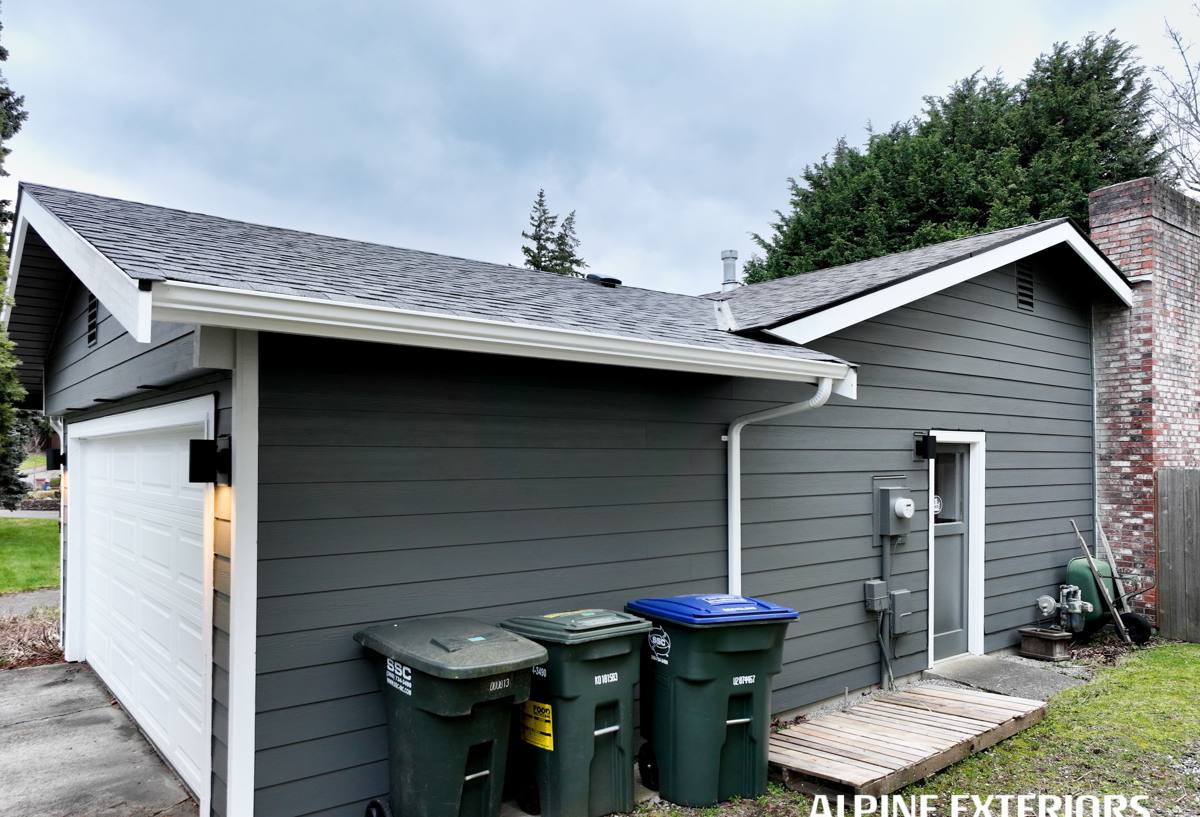
What Oldsmar's Climate Does to a Vertical Siding System
Board and batten has more seams and more fastener penetrations per square foot than flat lap siding — every batten covers a joint, and every joint is fastened through the material into the wall assembly beneath it. That's a manageable design detail in a mild, dry climate. It's a bigger deal for a home in Oldsmar, sitting near Old Tampa Bay, where the exterior envelope deals with several stresses at once:
- Hurricane-force wind loads during tropical systems, which put real lateral and uplift pressure on every fastener and seam in a vertical siding pattern
- Wind-driven rain that gets pushed sideways into laps, joints, and trim intersections rather than simply running down the wall
- Intense, near year-round UV exposure that breaks down unstable finishes and unprotected wood fiber faster than it would in a northern climate
- Salt air drifting in off the bay, which accelerates corrosion on exposed fasteners and stresses coatings not formulated for a marine-influenced environment
A board and batten system built from a material that swells, shrinks, or relies on field-applied paint as its primary weather barrier is asking a lot of that paint film under those conditions. Fiber cement doesn't have that weakness, which is the core reason we standardized on it for this style specifically — not just siding in general, but board and batten in particular, where the seam count makes material choice matter even more.
Why We Only Build Board & Batten in James Hardie Fiber Cement
We get asked, reasonably, why we don't offer board and batten in vinyl, engineered wood, or primed spruce and cedar boards — all of which are available and all of which can look fine on day one. The honest answer is maintenance burden and moisture behavior over the life of the product, not that those materials are junk.
Primed wood boards need a repainting cycle to stay protected, and every seam in a board and batten pattern is another place where a missed maintenance year lets moisture into end grain. Engineered wood composites hold up better than raw lumber but are still more sensitive at cut edges and seams than fiber cement, and their protective coatings vary by manufacturer and product line. Vinyl board and batten panels don't absorb water, but they expand and contract with heat more than fiber cement does, and that thermal movement can open gaps at seams over time — exactly the joints this style depends on staying tight.
James Hardie fiber cement is dimensionally stable across Florida's humidity swings and heat, holds a factory-applied finish instead of a field-applied one, and is manufactured with a warranty structure built around long-term ownership rather than a shorter service life. For a style with this many exposed seams, that combination is worth the trade-off of offering fewer material options.
Inside the HardiePanel + HardieTrim System
The board and batten look we install is built from HardiePanel vertical siding paired with HardieTrim battens — both engineered fiber cement, a cured mix of Portland cement, sand, and cellulose fiber. Two specifics matter for how this system performs locally.
HZ5 Formulation
James Hardie manufactures regional formulations rather than one universal product. Siding installed in our part of Florida is built to the HZ5 specification, engineered for high-humidity, high-moisture-exposure climates. It's a different mix than the version sold in dry inland states, which matters because a board and batten system spends its entire service life absorbing rain, humidity, and UV at a rate most of the country doesn't experience.
ColorPlus Factory Finish
Board and batten has more exposed edges and seams catching direct sun and rain from different angles throughout the day than a flat wall does, which makes finish durability more important than usual. ColorPlus is applied and cured in multiple coats under controlled factory conditions rather than sprayed or brushed on site, and it holds up to fading and chipping meaningfully better than field-applied paint on a home exposed to this much sustained UV and salt air.
What a Correct Installation Actually Requires
Board and batten punishes installation shortcuts more than flat lap siding does, simply because there are more places for water to find a way in if something is skipped or rushed. A correct installation includes:
- A continuous, properly lapped and sealed weather-resistant barrier behind the panels — not house wrap stapled up and left as-is
- Correct gapping at every panel butt joint and termination, per James Hardie's published fastening and clearance specifications
- Battens fastened at the specified spacing and penetration depth, secure enough to hold under hurricane-force wind without over-driving fasteners through the material
- Proper flashing at every horizontal transition — window heads, roof-to-wall intersections, and anywhere the vertical pattern meets a horizontal element
- Correct clearance at the base of the wall so siding stays above grade, decking, and roofing rather than sitting against standing water after a heavy rain
- Caulking used only where the manufacturer specifies it, never as a substitute for flashing and gapping done correctly elsewhere
None of these steps are unique to Hardie — they're the difference between a board and batten job that survives storm seasons in Oldsmar and one that starts showing seam trouble within a few years, regardless of what's underneath the paint.
How Board & Batten Materials Compare
| Material | Moisture Behavior | Finish Durability | Fit for Wind-Driven Rain |
|---|---|---|---|
| James Hardie fiber cement | Dimensionally stable; doesn't swell or shrink with humidity | Factory-cured ColorPlus finish, resists fade and chip | Engineered and tested for high-wind installation |
| Engineered wood composite | More moisture-sensitive at cut edges and seams than fiber cement | Relies on factory or field coatings with a shorter service life | Varies by manufacturer and product line |
| Primed spruce or cedar boards | Absorbs and releases moisture readily; prone to swelling and cupping at seams | Fully dependent on a repainting maintenance cycle | Not engineered specifically for hurricane wind zones |
| Vinyl board and batten panels | Doesn't absorb water but expands and contracts with heat, which can open seams | Color is through-body but can fade and chalk under sustained UV | Wind rating depends heavily on fastening pattern and panel gauge |
This isn't a claim that every alternative fails on every home — it's why, for this specific style in this specific climate, we build board and batten out of Hardie and nothing else.
Where Board & Batten Makes the Most Sense on a Countryside Home
Full-elevation board and batten is an option, but most of what we install in Countryside is targeted: a front gable, a porch or entry surround, a dormer, or a single feature wall paired with HardiePlank lap siding across the rest of the house. That approach keeps material and labor cost proportional while still delivering the architectural detail homeowners are after in the spot where it reads best from the street.
A few practical notes from doing this work locally:
- Deeper, saturated colors emphasize the shadow lines between battens; lighter colors give a softer, more uniform look
- Board and batten as an accent tends to concentrate on gables, dormers, and entries — the architectural high points of a home's front elevation
- ColorPlus color options hold their tone under sustained Florida sun better than most field-applied paint systems, which matters most on a style with this much surface detail catching direct light throughout the day
- James Hardie's panel and trim profiles are designed to transition cleanly into HardiePlank lap siding, so a partial application doesn't look like an afterthought
Our Process for Countryside Homeowners
The process is the same whether the project is a full re-side or a single accent feature, just scaled to the scope:
- On-site assessment — we walk the exterior, check the current substrate and any moisture or trim damage, and talk through where board and batten fits architecturally on the home
- Written estimate — a clear scope covering material, labor, trim work, and any substrate repair identified during the assessment, with no pressure to sign on the spot
- Substrate prep — removal of failing material, repair of any water damage or rot found underneath, and installation of a properly lapped weather-resistant barrier before a single panel goes up
- Panel and batten installation — HardiePanel and HardieTrim installed to James Hardie's fastening, gapping, and flashing specifications, not shortcuts based on what's fastest
- Flashing and detail work — window heads, roof-to-wall intersections, and the base of the wall are the points most likely to leak if rushed, so they get the most attention
- Final walkthrough — we review the completed work with the homeowner before calling the job done, not just at handoff of the invoice
Maintenance Under Pinellas County Conditions
One of the practical advantages of a Hardie board and batten system in this area is what it doesn't require. There's no annual caulk-and-repaint cycle to chase, and the panels aren't absorbing humidity between rain events or feeding termites the way wood boards can. Realistic upkeep looks like:
- An occasional rinse to clear salt residue, pollen, and general grime, particularly on wall faces that catch onshore wind off the bay
- A visual check after any major storm for battens that may have loosened or flashing that shifted
- Keeping landscaping and irrigation from spraying directly against the base of the wall
- Touch-up limited to actual physical damage — not treated as a routine, scheduled task
Why Hiring a Crew That Already Works in Countryside Matters
Board and batten installation quality comes down to details most homeowners can't inspect after the fact — how the weather-resistant barrier was lapped, whether gapping matches spec, whether flashing was installed at every transition or just the obvious ones. A crew that already works regularly in Countryside and the surrounding Oldsmar area has already dealt with the wind exposure, the bay-adjacent salt air, and the storm patterns this specific area sees, rather than applying generic installation practices and hoping they hold up locally. That local repetition is also what makes it possible to give homeowners a straight, realistic answer about scope and cost before work starts, instead of discovering surprises mid-project.
Board and batten is a style choice; James Hardie is the material and installation standard we build it with. If you're weighing a board and batten accent or a fuller exterior update for a Countryside home, we're glad to walk the property, talk through where the style fits best, and put together a free, no-pressure estimate.