 Oldsmar Siding
 Why Siding Replacement Is a Different Job Near Oldsmar
Town 'N Country homeowners who start looking into new siding usually start with a repair in mind — a cracked panel, a soft spot near a downspout, paint that won't hold anymore. But once our crew gets a ladder up and pulls a section of old siding off the wall, the conversation often changes. What looked like a cosmetic problem is frequently a sign that the siding itself, and sometimes the layer behind it, has quietly failed. Full replacement isn't the default answer we reach for — but in this part of the Gulf Coast, it's the honest one more often than homeowners expect.
That's because siding here doesn't fail from one big event. It fails from years of repetition: hurricane-force wind gusts that flex panels and work seams loose, sun that never really lets up, wind-driven rain that gets pushed sideways into laps and joints, and salt-laden air drifting in off the Gulf that accelerates corrosion on fasteners and trim. A siding replacement done right for a Town 'N Country home has to be engineered around all four of those stresses at once, not just whichever one caused the visible damage.
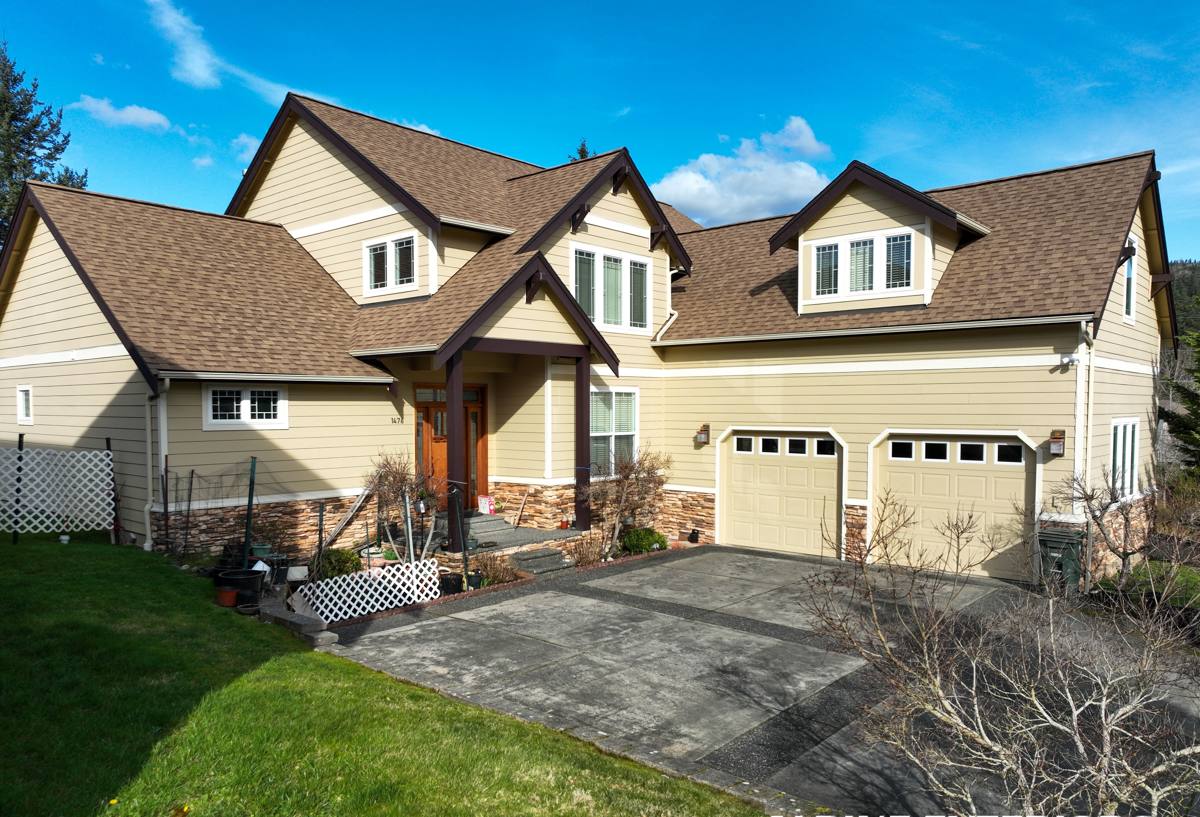
What This Climate Actually Does to Siding
Wind
Tropical storms and hurricane remnants push sustained wind loads against exterior walls that most siding products were never tested to handle long-term. Panels that aren't fastened to spec, or that use a fastening pattern designed for a milder climate, start to lift, bow, or pop loose at the edges over repeated storm seasons — even if no single storm ever "damages" them outright.
UV exposure
Florida sun is nearly constant, and UV breaks down pigments and surface coatings faster than in most of the country. Paint film chalks, fades unevenly, and eventually cracks, especially on south- and west-facing walls that get the most direct exposure through the day.
Wind-driven rain
Rain that falls straight down is easy for siding to shed. Rain that's being pushed sideways at 40+ mph finds every gap, lap, and unsealed joint. Over time it works behind panels that aren't lapped or flashed correctly, soaking the sheathing and framing behind them — often with no visible sign on the surface until the damage is advanced.
Salt air
Even well inland from open water, coastal air carries enough salt to accelerate corrosion on fasteners, trim screws, and any exposed metal. Once fasteners start to corrode and lose their grip, the siding they're holding starts moving — which opens the door to the wind and water problems above.
Signs a Town 'N Country Home Needs Replacement, Not Repair
- Soft, spongy, or crumbling spots when you press on the siding, especially near the bottom courses or under windows
- Paint that's failing across large sections rather than one isolated area
- Visible cupping, warping, or buckling panels, particularly after a windy season
- Rust streaks or corrosion around fasteners and trim
- Repeated caulk failure in the same spots even after being redone
- Rising interior humidity, musty smell, or peeling interior paint on exterior-facing walls
- Visible rot or discoloration on trim boards and corner posts
Any one of these on its own might be a repair. Several of them together, especially spread across more than one elevation of the house, usually mean the siding system as a whole has reached the end of its useful life.
What a Correct Replacement Actually Involves
Replacement isn't just stripping old panels and nailing up new ones. Done properly, it's an opportunity to fix the layers homeowners never see and that determine how long the next 20-plus years go.
Full tear-off, not overlay
We remove the existing siding down to the sheathing rather than installing over it. Siding-over-siding traps moisture, adds unnecessary weight, and hides the exact problems — rot, mold, failed sheathing — that the replacement is supposed to solve.
Sheathing and framing inspection
With the old siding off, we can actually see the wall. Any soft or water-damaged sheathing, deteriorated framing, or hidden mold gets addressed before a single new panel goes up. Skipping this step is the single most common reason a siding job fails early in this climate.
Weather-resistive barrier
A correctly lapped and sealed moisture barrier goes behind the new siding, engineered to shed wind-driven rain down and out rather than let it track sideways into seams.
Flashing at every penetration
Windows, doors, hose bibs, vents, and any other wall penetration get proper flashing so water is directed out and away from the wall assembly, not just caulked over. Caulk is a maintenance item; flashing is a permanent detail.
Fastening to spec
Correct fastener type, spacing, and placement matter more in a high-wind zone than almost anywhere else in the country. This is also where a lot of underpriced siding jobs cut corners — fewer fasteners, wrong length, wrong placement — because it's invisible once the job is finished.
Factory-applied finish
We install James Hardie's ColorPlus finish, which is baked on at the factory under controlled conditions rather than field-painted after installation. It holds color and resists the fading and chalking that constant Florida UV causes in site-applied paint.
Our Process, Start to Finish
- Walkthrough and assessment — we look at every elevation, check for soft spots, and talk through what we're seeing and why
- Written scope and estimate — clear line items, no vague allowances
- Tear-off — old siding and trim removed, wall assembly exposed
- Repair as needed — any damaged sheathing or framing replaced before moving forward
- Barrier and flashing installation — moisture management layer installed and detailed at every penetration
- Siding installation — James Hardie panels or lap siding installed to manufacturer fastening spec
- Trim and finish details — corners, trim boards, and joints finished cleanly
- Final walkthrough — we go over the finished work with you before calling the job done
Comparing Siding Materials for This Climate
| Material | Wind performance | Moisture behavior | UV/color stability | Long-term maintenance |
|---|---|---|---|---|
| James Hardie fiber cement | Engineered HZ product lines for high-wind, high-humidity regions | Non-combustible, dimensionally stable, resists moisture-driven warping | ColorPlus factory finish resists fading and chalking | Low — occasional wash, no repainting on schedule |
| Vinyl siding | Can warp, crack, or blow off in sustained high winds | Can trap moisture behind panels if not installed carefully | Fades and becomes brittle under constant UV over time | Low upfront, but limited repair options once damaged |
| LP SmartSide / engineered wood | Performs reasonably when installed and sealed correctly | Edges and cut ends are moisture-sensitive; needs diligent sealing and caulk upkeep | Field-applied finishes fade faster than factory finishes | Higher — regular caulk and paint inspection required |
| Primed wood/cedar | Variable; dependent on installation and species | Most moisture-sensitive option; prone to rot without consistent upkeep | Requires repainting on a recurring cycle | Highest — ongoing sealing, painting, and rot checks |
We install James Hardie exclusively. It's not the only siding product on the market, and each of the alternatives above has legitimate uses — but for the wind, moisture, UV, and salt-air combination this area sees every year, fiber cement engineered specifically for climate performance is what we're willing to put our name behind. We'd rather turn down a job than install something we don't believe will hold up here.
What Drives Cost on a Replacement
- Total square footage and number of stories
- How much sheathing or framing repair is uncovered once tear-off starts
- Number of corners, penetrations, and trim details
- Siding profile chosen — lap, panel, or shingle-style
- Color and finish selection
- Accessibility of the property and staging requirements
We won't quote a real number without seeing the house, but we will give you a clear, itemized estimate up front — no vague per-square-foot guess that turns into change orders once the walls are open.
Why Hiring Local Experience Matters Here
A siding crew that works Town 'N Country and the surrounding Oldsmar area regularly already knows what this climate does to a wall assembly, because we've opened up dozens of them. We know which elevations tend to take the worst UV exposure, which fastening details actually hold up through a full hurricane season, and where wind-driven rain typically finds its way in on homes built the way most in this area were built. That's knowledge you only get from doing the work here, not from a general contracting background applied to any region.
It also means accountability. We're not driving in from out of the area for one job — we're a Pinellas County-based crew, and the work we do on your home is work our name stays attached to locally, long after the last panel goes up.
Ready to Talk About Your Home?
If your siding is showing wear, or you just want an honest read on whether repair or full replacement makes more sense for your home, we're happy to take a look. Fill out the form below for a free, no-pressure estimate — we'll walk the property, answer your questions directly, and give you a clear picture of what your home actually needs.