 Oldsmar Siding
 What Tampa Bay Weather Does to Siding
Homes in the Tampa side of the Oldsmar service area sit in one of the more demanding climates in the country for an exterior wall. It isn't one problem — it's four working together year after year. Hurricane-force gusts flex siding and test every fastener and seam. Intense, near-constant UV breaks down pigments and softens some plastics and resins faster than manufacturers like to advertise. Wind-driven rain doesn't just fall straight down here; it gets pushed sideways into laps, corners, and trim joints during storms, which means a siding system's water management matters as much as its face material. And because this area sits close enough to Tampa Bay and the Gulf, salt-laden air is a constant low-grade presence, accelerating corrosion on fasteners, hardware, and anything not rated to handle it.
None of this means siding is doomed here. It means the material and the installation both have to be chosen for this specific climate, not for a national average. That's the standard we hold every fiber cement job to in this area.
Why This Matters More in Certain Neighborhoods
Homes closer to the water or in more exposed, wind-open sites feel these effects first and hardest — faster fading, earlier caulk failure, more visible wear at corners and butt joints. Even homes set back from the coast still get the same UV load and the same wind-driven rain during tropical systems. The climate math is regional, not just waterfront.
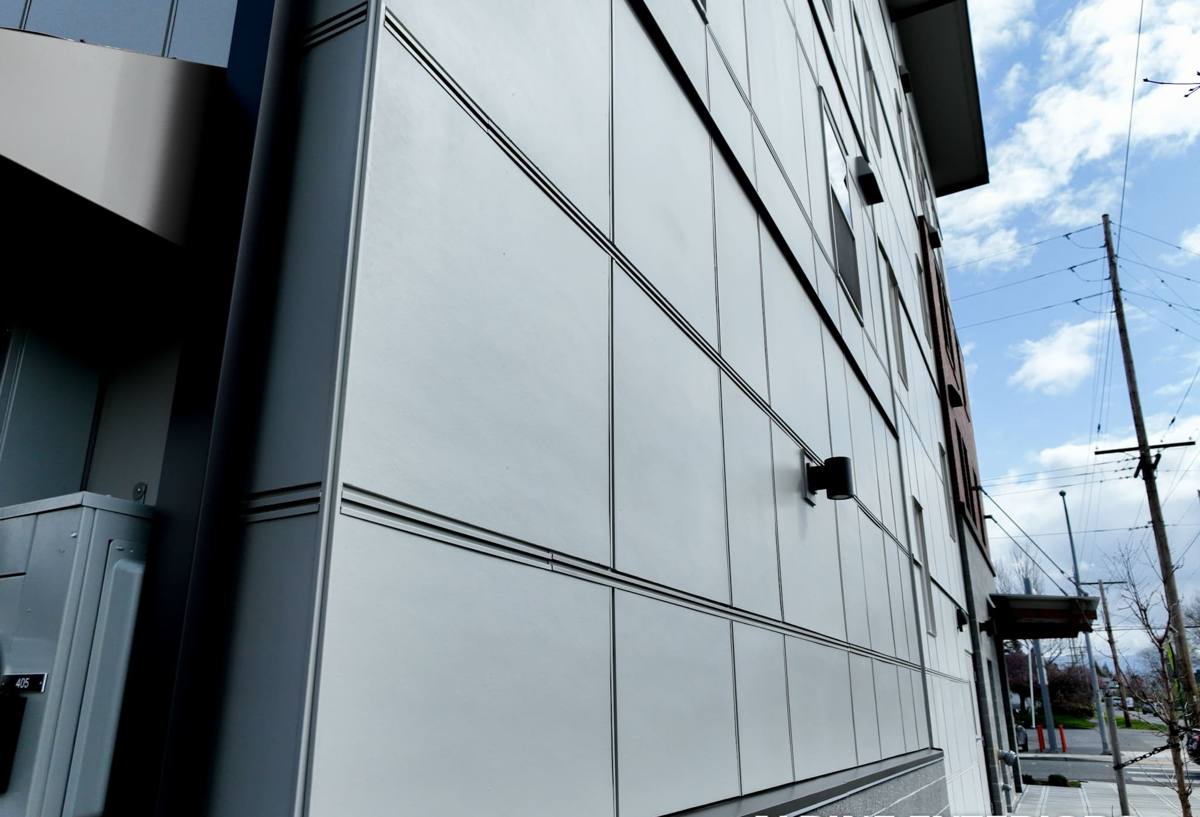
Why We Install Only James Hardie Fiber Cement
Fiber cement as a category is a mix of Portland cement, sand, and cellulose fibers, engineered to resist fire, rot, and pests better than wood-based products, and to hold paint and color longer than vinyl. But "fiber cement" isn't one product — formulation, factory finish, and climate engineering vary by manufacturer, and those differences show up on a house within a few Florida summers, not decades later.
We standardized on James Hardie specifically because of three things: the HZ5 product engineering built for high-humidity, hurricane-exposed climates like ours; the ColorPlus factory finish, which is baked on and warranted separately from the substrate instead of relying on job-site paint to hold up against this sun; and a manufacturer warranty structure that's transferable and backed by a company with decades of track record in fiber cement specifically. We don't install LP SmartSide, vinyl, primed wood, or off-brand fiber cement — not because every alternative is bad at everything, but because we've drawn a line on what we're willing to warranty our workmanship against in this climate, and Hardie is what clears that bar consistently.
Getting the Installation Right in a Coastal Wind Zone
Fiber cement siding is only as good as the installation underneath it. Most siding failures we get called out to inspect aren't material failures — they're installation shortcuts that a hurricane-prone, high-UV coastal climate exposes faster than it would elsewhere.
Fastening and Clearances
Correct nailing pattern and fastener spacing matter more here because wind uplift on a gable end or corner during a tropical system puts real load on every fastener. We follow James Hardie's published fastening schedules for wind exposure, not a generic pattern, and we use fasteners rated to resist the corrosion that salt air causes over time.
Flashing and Water Management
Wind-driven rain finds any gap in flashing around windows, doors, and roof-to-wall intersections. Housewrap, flashing tape, and proper lap sequencing under the siding do the real waterproofing work — the siding itself is the weather-facing layer, not the only barrier. Skipping or rushing this step is the single most common cause of hidden moisture damage we find behind old siding in this area.
Clearance and Ground Contact
Hardie board needs proper clearance from grade, roofing, and decks to avoid sustained moisture contact, and joints need to be caulked and painted per spec, not left raw. In a climate with this much humidity and rain, those small details determine whether a siding job looks right for two years or holds up for two decades.
How Fiber Cement Compares to Other Siding Options
Homeowners in this area often ask us to walk through the alternatives honestly. Here's how the common options stack up on the factors that actually matter in a Tampa Bay coastal climate.
| Material | Wind/Impact Resistance | UV & Color Stability | Moisture Behavior | Typical Lifespan Here |
|---|---|---|---|---|
| Vinyl siding | Can crack or blow off in high gusts; softens in extreme heat | Fades and chalks within a decade of intense sun | Doesn't rot itself, but traps moisture behind it if not vented properly | 15-25 years |
| Primed wood/cedar | Fair, but panels can warp or split under wind stress | Needs repainting on a regular cycle to resist UV breakdown | Rot and pest risk if moisture gets behind or into the wood | 10-20 years without diligent upkeep |
| LP SmartSide (engineered wood) | Good structural resistance | Factory finish holds up reasonably, but edges are moisture-sensitive | Requires strict edge-sealing; swelling risk if compromised | Varies widely with installation quality |
| James Hardie fiber cement | Engineered and tested for high-wind, hurricane-exposed regions | ColorPlus factory finish is warranted against fading | Non-combustible, resists rot; performance depends on correct install | 30+ years when installed to spec |
Signs Your Current Siding Is Losing the Fight
Before deciding whether replacement makes sense, it helps to know what climate-driven failure actually looks like on a house in this area. Watch for:
- Visible warping, buckling, or gaps at panel seams after storm seasons
- Chalky residue or noticeable color fade on sun-facing walls
- Soft spots, staining, or a hollow sound when you tap near the bottom edges
- Caulk that's cracked, shrunk, or pulled away from trim and corners
- Rust streaks around fasteners or trim hardware
- Paint that's peeling or bubbling faster than a normal repaint cycle would explain
Any one of these can be minor. Several at once, especially on the same elevation, usually points to a water-management or installation issue underneath, not just cosmetic wear.
Our Process, Start to Finish
A fiber cement job in this climate has to be sequenced carefully. Here's the process we follow on every project in the Tampa side of our Oldsmar service area:
- On-site assessment. We look at existing siding, wall condition, moisture history, and wind exposure specific to the home's site before quoting anything.
- Product and color selection. We walk through James Hardie's HZ5 lines and ColorPlus palette so the choice fits the home and holds up to this sun.
- Tear-off and substrate check. Old siding comes off and we inspect sheathing for hidden moisture damage before anything new goes up.
- Housewrap and flashing. Weather-resistive barrier and flashing at every penetration, sequenced correctly for wind-driven rain.
- Installation to manufacturer spec. Fastening schedule, clearances, and joint treatment matched to wind exposure and coastal fastener requirements.
- Final finish and walk-through. Caulking, trim detail, cleanup, and a review with the homeowner before we call it done.
Cost Factors for a Fiber Cement Project Here
Every home is different, so we don't quote broad numbers without seeing the job, but the factors that move a fiber cement estimate up or down in this area are fairly consistent:
| Factor | Why It Affects Cost |
|---|---|
| Tear-off vs. new construction | Removing and disposing of old siding, plus repairing any hidden substrate damage, adds labor |
| Home shape and trim detail | More corners, gables, and trim transitions mean more cutting, flashing, and finishing time |
| Siding profile chosen | Lap width, panel style, and accessory trim vary in material and labor cost |
| Substrate repair needs | Rot or moisture damage found during tear-off has to be addressed before new siding goes on |
| Site access and wind exposure | Height, staging, and exposure level can affect scheduling and crew approach |
Long-Term Care Once It's Installed
One of the practical advantages of a correctly installed James Hardie system in this climate is how little ongoing maintenance it asks for compared to wood or vinyl. It won't rot, it resists pests, and the factory finish is engineered to hold color far longer than field-applied paint. That said, no siding in a salt-air, high-UV, hurricane-exposed climate is maintenance-free. A periodic rinse to clear salt residue and pollen, an annual look at caulking and trim joints, and prompt attention to any storm damage will keep a Hardie system performing at its rated lifespan instead of just its minimum.
Why Local Experience Matters
A siding system that's correct on paper can still fail on a house if the crew installing it hasn't dealt with this specific combination of wind exposure, humidity, and salt air before. Fastening schedules, flashing sequencing, and clearance details all need to be adjusted for how this coastline actually behaves during storm season — not just followed generically from a manual written for a different climate. A crew that already works the Tampa side of the Oldsmar area has seen how these homes age, where water actually gets in, and what corners genuinely can't be cut here.
If your siding is showing its age, or you're planning ahead of the next storm season, we're happy to take a look and walk you through what your home specifically needs. Reach out for a free, no-pressure estimate using the form below.