 Oldsmar Siding
 Siding Repair Built for Safety Harbor's Exposure
Safety Harbor sits along Old Tampa Bay in Pinellas County, and homes here take a specific combination of punishment: hurricane-force wind events that push rain sideways into every seam and joint, intense year-round UV that never really lets up even in the cooler months, and salt-laden air drifting off the bay that works on fasteners and finishes long after a storm has passed. Siding damage in this area rarely comes from one dramatic event. More often it's the slow accumulation of small failures — a cracked panel that let water behind the wall two seasons ago, a loose piece of trim that's been flexing in every gust since — that finally shows up as a visible problem.
We repair siding for homes in Safety Harbor and throughout the Oldsmar area, and we install James Hardie fiber cement exclusively. That matters for repair work as much as it does for new installations, because how a wall gets fixed — and what it gets fixed with — determines whether the repair holds for another decade or becomes the next callback.
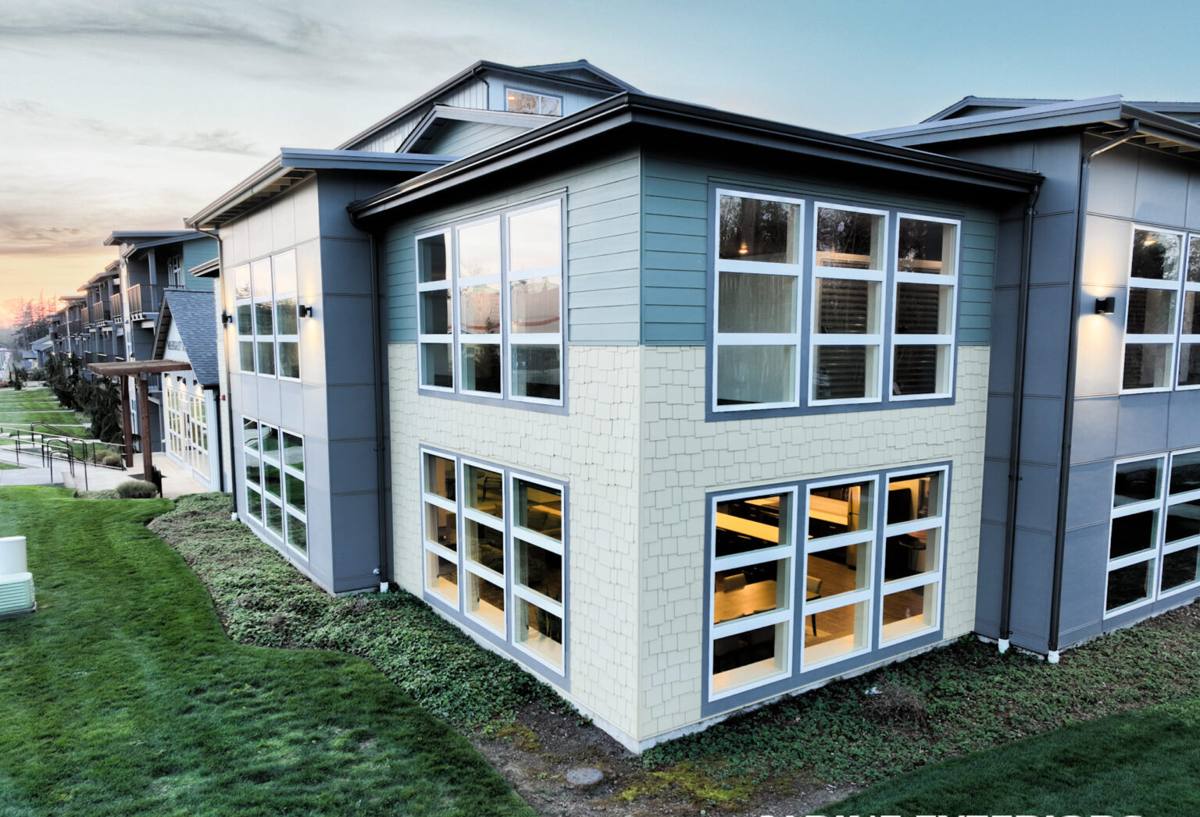
What Safety Harbor's Climate Does to Siding Over Time
Wind-Driven Rain and Storm Exposure
Rain in a hurricane or tropical storm event doesn't fall straight down — it gets driven sideways by sustained wind, which forces water into laps, seams, and any gap in flashing or caulking that a calmer climate would never test. A single storm can push moisture behind siding that looked fine the week before. That water doesn't always announce itself right away; it can sit behind the panel for months, softening sheathing and encouraging rot or mold, before it finally shows as a soft spot, a stain, or paint that's started to bubble.
Year-Round UV Load
Florida doesn't get a real off-season for sun exposure. Panels, trim, and caulk joints take a steady UV load twelve months a year, which accelerates the breakdown of lower-grade finishes and can leave caulk brittle and cracked well before a homeowner expects to think about maintenance. Once a caulk joint fails, it stops doing its job as a water barrier, and that's often the actual starting point of a repair that later looks like a bigger problem than it is.
Salt Air Off the Bay
Safety Harbor's location on Old Tampa Bay means homes here get a real dose of salt-laden air, even set back from the water. Salt accelerates corrosion in exposed fasteners and can degrade certain finishes faster than you'd see further inland. A repair that reuses corroded fasteners or ignores the salt exposure is a repair that's likely to need attention again sooner than it should.
Signs a Safety Harbor Home Needs Siding Repair
Some damage is obvious after a storm. Other damage builds quietly and is easy to miss until it's more expensive to fix. Homeowners in this area should watch for:
- Cracked, split, or visibly warped panels, especially after a wind event
- Soft or spongy spots when you press on the siding near the bottom of walls or under windows
- Paint that's peeling, bubbling, or discoloring in a localized area rather than evenly across the wall
- Gaps opening up at seams, corners, or where siding meets trim, window frames, or doors
- Visible fastener corrosion or streaking below nail or screw heads
- A musty smell near an exterior wall, which can point to trapped moisture behind the siding
- Loose or rattling panels during windy weather, a sign fasteners have backed out or failed
Any one of these on its own might be a small fix. Several at once, or damage that's spread across more than one wall, usually means the underlying moisture barrier or fastening has been compromised and needs a closer look before more siding goes up.
What a Correct Repair Actually Involves
A siding repair that's done right is not just about matching the visible panel. It starts underneath.
Diagnose Before Replacing
Before we touch a panel, we look at why it failed. A cracked board from impact damage is a different repair than a soft board caused by months of trapped moisture. Replacing the visible panel without addressing what let water in behind it — failed flashing, a gap in the house wrap, a caulk joint that gave out — just resets the clock on the same failure.
Check the Substrate
Once a damaged section is removed, we check the sheathing and house wrap underneath for rot, softness, or existing moisture damage. Any compromised material gets addressed before new siding goes back on. Closing up a wall over damaged sheathing is one of the most common ways a "repair" turns into a bigger problem a year or two later.
Match the Material and the Installation Details
Repairs on a Hardie-sided home should use Hardie product — matched profile, matched exposure, and where possible matched ColorPlus finish so the repair doesn't stand out as an obvious patch. Fasteners, flashing, and caulk all need to meet the same standard as a full installation, not a shortcut version of it. A repair that's installed to a lower standard than the surrounding wall is often the first section to fail again.
Re-Seal the Water Path
Every seam, joint, and penetration point gets properly flashed and sealed as part of the repair, not just cosmetically caulked over. In a climate that sees wind-driven rain and sustained humidity, the water management behind the siding matters as much as the surface appearance.
Repair vs. Full Replacement: How We Help You Decide
Not every damaged section needs a full re-side, and not every home is a good candidate for a patch repair. We walk Safety Harbor homeowners through the honest trade-offs rather than defaulting to the bigger job.
| Factor | Favors Repair | Favors Full Replacement |
|---|---|---|
| Extent of damage | Isolated to one or two areas | Spread across multiple walls or elevations |
| Age of existing siding | Relatively new, still under warranty | Nearing or past expected service life |
| Moisture findings | Localized, sheathing intact | Widespread rot or repeated moisture intrusion |
| Material match | Current siding still available or close match exists | Discontinued profile or color, patch would be visibly mismatched |
| Underlying cause | One-time event (impact, isolated flashing failure) | Systemic issue (original install error, chronic water path) |
When repair is the right call, we say so — there's no reason to push a full replacement on a home that doesn't need one. When the damage points to a systemic problem, we'll explain what we found and why a patch would likely just fail again.
Why a Crew That Already Works Safety Harbor Matters
Siding repair is diagnostic work as much as it's installation work. A crew that regularly works this part of Pinellas County has a working sense of how storm patterns, bay-side salt exposure, and Florida's UV load actually show up in wall assemblies here — which is different from what a contractor primarily used to inland or drier climates will default to assuming. That local pattern recognition shortens the diagnostic step and reduces the chance of a repair that addresses the symptom but misses the cause.
There's also a practical service side to this. Storm-driven repair needs tend to cluster after major wind events, and a crew already established in the area is easier to reach and schedule without a long wait behind a broader regional backlog.
Our Repair Process
- Inspection and diagnosis. We assess the visible damage and check for signs of trapped moisture or compromised sheathing before recommending a scope of work.
- Honest scope recommendation. We tell you whether it's a targeted repair, a larger section replacement, or something that warrants a full re-side conversation — and why.
- Substrate check and correction. Any damaged sheathing or house wrap found during the repair gets addressed, not covered over.
- Matched material installation. Repairs use Hardie product matched to your existing siding's profile and finish wherever a match is available.
- Proper sealing and flashing. Every seam and penetration point in the repaired area is flashed and sealed to the same standard as new installation work.
- Final walkthrough. We review the completed repair with you so you know exactly what was found and fixed.
Why We Only Repair With James Hardie Fiber Cement
We install and repair James Hardie fiber cement siding exclusively — we don't work in vinyl, LP SmartSide, Cemplank, Allura, or primed wood siding. For repair work specifically, that standardization matters because it means our crews carry deep, specific knowledge of how Hardie panels behave, how they fail, and how to fix them correctly, rather than spreading that expertise thin across several different material systems. James Hardie's HZ product lines are engineered for high-humidity, high-moisture climates like ours, and the ColorPlus factory finish gives us a real shot at a repair that blends into the existing wall instead of standing out as an obvious patch. That consistency is a big part of why repairs on Hardie siding tend to hold up rather than becoming the first thing that fails again in the next storm season.
If you're seeing cracked panels, soft spots, or storm damage on your Safety Harbor home, we're happy to take a look and give you a straight answer about what it actually needs. Reach out for a free, no-pressure estimate — we'll assess the damage, explain what we find, and recommend a repair scope that fits the problem, not an upsell.