 Oldsmar Siding
 Building a Deck That Holds Up in the Largo Area
Homes around Largo and Oldsmar sit close enough to the Gulf and Tampa Bay that a deck here lives a different life than one built inland. Between hurricane-force wind events, near-constant summer humidity, intense UV exposure almost year-round, and the slow creep of salt air into every metal fastener and joist hanger, a deck in this part of Pinellas County is under load in ways a lot of national "deck building" advice doesn't account for. We build decks for this specific environment, not a generic one, and that shows up in the framing, the fasteners, the material choices, and how we sequence the job around Florida's rain patterns.
This page is about deck building specifically for the Largo area — what local conditions demand, what a correctly built deck actually involves, how we run the project, and why working with a crew that already builds in this exact climate matters more here than in most parts of the country.
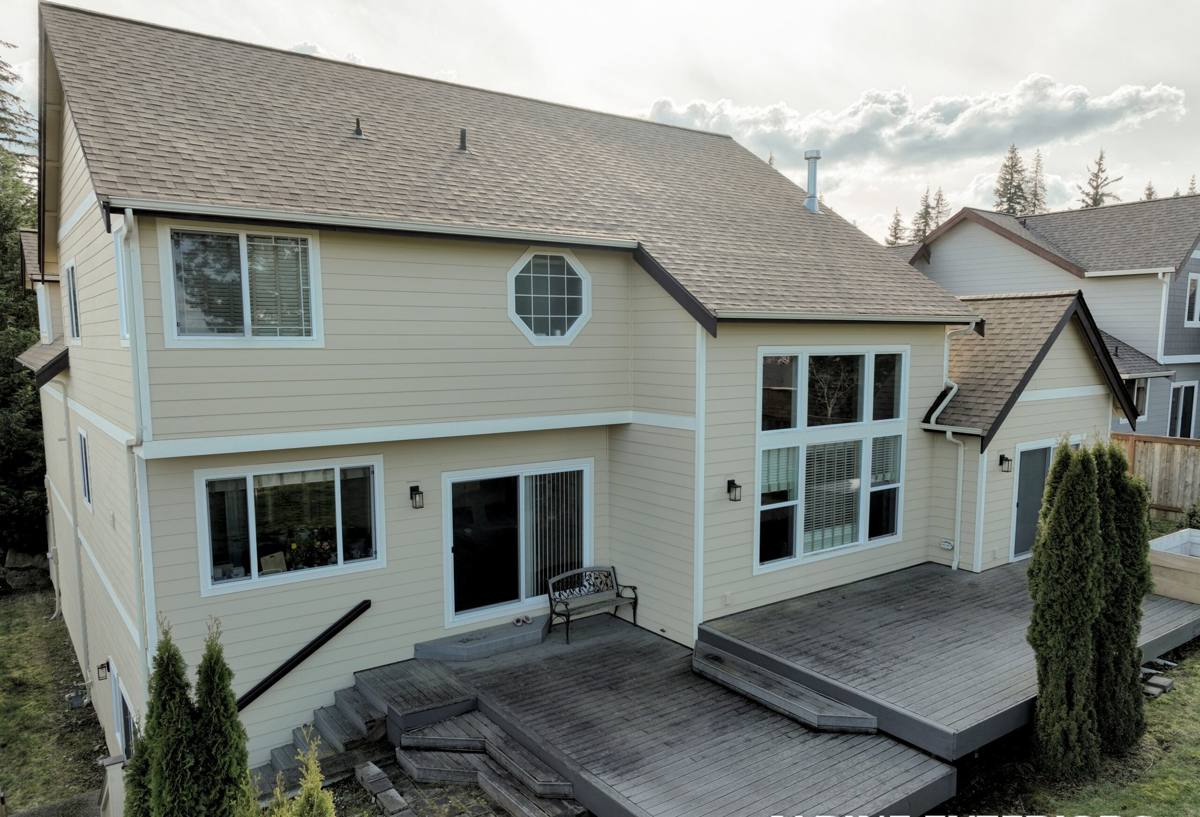
What Largo's Climate Actually Does to a Deck
Sun and Heat
Pinellas County gets strong, direct UV exposure for most of the year. On an unshaded deck, that means faster fading, surface checking, and embrittlement of lower-grade woods and some composite formulations. It also means certain decking colors and material types get hot enough underfoot in July and August to matter for anyone walking barefoot — something worth discussing before you pick a color, not after.
Wind-Driven Rain and Humidity
Rain here doesn't fall straight down — tropical systems and afternoon storms push it sideways, right into ledger connections, railing posts, and any gap where water can get behind a board or into end grain. Combined with high ambient humidity for much of the year, wood that isn't detailed correctly stays damp longer than it would in a drier climate, which is exactly the condition that accelerates rot and fastener corrosion.
Salt Air
Even set back from the water, homes in this part of the county see salt-laden air move through regularly. Salt accelerates corrosion in standard fasteners, cheap hardware, and lower-grade flashing far faster than inland environments. This is one of the most common causes of premature deck failure we see on older Largo-area decks — not the decking boards themselves, but the metal holding everything together.
Wind Load
This is a hurricane-exposure region, and decks — especially elevated ones, or those attached to the house — need to be framed and fastened with real wind uplift and lateral load in mind, not just vertical weight. A deck that only accounts for people standing on it, and not wind trying to lift or rack it, is a deck that fails during the exact event it needed to survive.
What a Correctly Built Deck Involves Here
A deck that's going to hold up in this climate isn't just "add lumber, add screws." The details that matter most are usually invisible once the project is finished, which is exactly why they get skipped by contractors trying to save time.
- Ledger flashing done right — where the deck attaches to the house, proper flashing (not just caulk) keeps wind-driven rain from tracking behind the siding or into the rim joist. This is the single most common failure point on decks we're asked to repair.
- Corrosion-resistant fasteners and hardware — hot-dip galvanized or stainless steel connectors and fasteners rated for coastal/salt-air exposure, used throughout, not just on visible surfaces.
- Footings sized and set for local soil and wind load — footing depth and post spacing follow Pinellas County code requirements for the wind exposure category, not a generic national minimum.
- Proper board spacing and drainage — gaps sized to let wind-driven rain drain and boards dry out between storms instead of trapping moisture.
- Railing and stair connections built for lateral load — railings take real force in wind events and when people lean on them; these connections get over-built here, not minimized.
- End-grain sealing on any cut lumber — cut ends are where moisture gets into wood fastest; every field cut gets sealed before installation.
Decking Material Options: What Actually Makes Sense in This Climate
There's no single "best" decking material — there's a best material for your budget, your maintenance appetite, and how the deck will be used. Here's how the common options actually perform in a Largo-area coastal climate, based on how each material behaves under sun, humidity, and salt exposure.
| Material | Upfront Cost | Maintenance | Heat Underfoot | Salt Air / Coastal Performance |
|---|---|---|---|---|
| Pressure-treated pine | Lowest | Annual sealing/staining recommended | Moderate | Fair — needs consistent upkeep or fasteners and end grain corrode/rot faster |
| Capped composite | Mid-high | Occasional washing, no staining/sealing | Can run hot in dark colors | Good — capped shell resists moisture and salt better than uncapped composite |
| Cellular PVC | Highest | Lowest — washing only | Runs hottest in dark colors, coolest in light colors | Very good — non-porous, doesn't absorb moisture or salt |
| Tropical hardwoods (e.g., ipe-type) | High | Periodic oiling to maintain color, or allow to weather gray | Moderate | Good — naturally dense and rot-resistant, but fasteners must be corrosion-rated |
We don't push one product over another as a default. We'll walk through what each option actually costs to own over 10-15 years in this climate — not just the sticker price — so you're choosing based on real trade-offs, not a showroom sample.
A Note on Lower-Grade Composite
Not all composite decking is built the same. Older, uncapped composite formulations can absorb moisture and are more prone to mold staining and swelling in humid, coastal climates like ours. That's a maintenance and moisture-behavior trade-off worth knowing before you buy based on price alone — it's not that the product is defective, it's that it behaves differently in this specific environment than it might in a dry inland climate.
Permits and Code Requirements in Pinellas County
Deck construction in the Largo/Oldsmar area requires a building permit in virtually every case — this isn't optional paperwork, it's what gets your footing depth, fastener spacing, and railing height inspected against the wind exposure requirements for this part of the county. An unpermitted deck can also become a real problem at resale, since it typically has to be brought up to code or disclosed to a buyer.
We handle the permitting process as part of the job: pulling the permit, scheduling required inspections, and building to the plan that gets approved — not a version that gets quietly modified after inspection. If your property sits in a flood zone or has elevation requirements, that gets factored into the footing and framing design from the start, not discovered halfway through construction.
How We Run a Largo Deck Project
- On-site assessment — we look at your yard's drainage, existing structure (if replacing a deck), sun/shade exposure, and how the space will actually be used.
- Material and layout discussion — honest trade-offs on decking material, railing style, and layout based on your budget and how much maintenance you want to take on long-term.
- Written estimate — clear scope, materials, and pricing before anything is signed.
- Permit submission — we prepare and submit the permit package to the county so the design is approved before framing starts.
- Framing and structural inspection — footings, posts, and framing built to the approved plan, inspected before decking goes down.
- Decking, railing, and stairs installed — including proper flashing, fastener selection, and drainage detailing.
- Final inspection and walkthrough — we go over the finished deck with you, including basic maintenance expectations for the material you chose.
Common Problems We Find on Existing Largo-Area Decks
When we're called out to repair or rebuild an older deck in this area, the issues are usually the same handful of things:
- Rotted ledger boards from missing or failed flashing at the house connection
- Corroded fasteners and joist hangers from standard (non-coastal-rated) hardware
- Wobbly railings from under-sized post connections that were never built for real lateral load
- Standing water and mold staining from boards installed with insufficient gap spacing
- Undersized or shallow footings that have shifted or settled over time
Almost none of these are visible from a casual look at the deck — they show up as soft spots, movement, or staining well after the problem has been developing for a while, which is why we always recommend a real inspection rather than a surface-level look before deciding whether to repair or replace.
Maintenance: Keeping a Largo Deck Sound Between Storm Seasons
Whatever material you choose, a small amount of regular attention goes a long way in this climate. A simple seasonal checklist:
- Sweep debris out of board gaps so water keeps draining freely
- Rinse off salt residue and pollen buildup a few times a year, especially after storms
- Check railing posts and stair stringers for movement or looseness
- Inspect ledger flashing and the house connection for gaps or caulk failure
- Re-seal or re-stain wood decking on the manufacturer's recommended schedule — don't wait for visible graying or cracking
- Look underneath the deck once or twice a year for signs of moisture, corrosion, or pest activity
Why a Crew That Already Works in Largo Makes a Difference
Deck building isn't a one-size-fits-all trade, and the difference between a deck that lasts 10 years and one that lasts 25+ in this climate usually comes down to details a homeowner never sees: the flashing behind the ledger, the grade of fastener used, the footing depth actually matched to code. A crew that already works in the Largo and Oldsmar area knows the county's permitting process, has already worked through the wind-load and flood-zone requirements that apply here, and has seen firsthand what standard-grade materials and hardware do after a few Gulf Coast summers and storm seasons. That's not something you can substitute with a generic national deck-building checklist.
If you're planning a new deck or need an honest opinion on repairing versus replacing an existing one, we're glad to take a look and give you a straightforward, no-pressure estimate — just fill out the form below and we'll go from there.