 Oldsmar Siding
 East Lake's Climate Puts Real Demands on a Home's Exterior
East Lake sits inland from the Gulf, built up around its namesake freshwater lakes rather than directly on the coast. That distance buys homes here a little relief from the salt exposure that beachfront Pinellas neighborhoods deal with daily — but it doesn't buy much relief from the rest of what Tampa Bay weather throws at a house. Summers bring long stretches of intense, direct UV that bakes painted surfaces and trim year after year. Afternoon storms roll in fast and hard, often sideways, driven by wind rather than falling straight down. And during hurricane season, this part of Pinellas County still sees tropical-storm and occasionally hurricane-force wind events that test every seam, fastener, and joint on a home's siding.
Add in Florida's humidity, which never really goes away, and you have a climate that's tough on siding in three specific ways: constant moisture pressure at seams and penetrations, UV breakdown of paint and caulk, and wind loads that find any weak point in the installation. A siding system that isn't built and installed for this combination will show it early — chalking paint, soft trim boards, cracked caulk lines, and in worse cases, moisture getting behind the cladding where you can't see it until the damage is done.
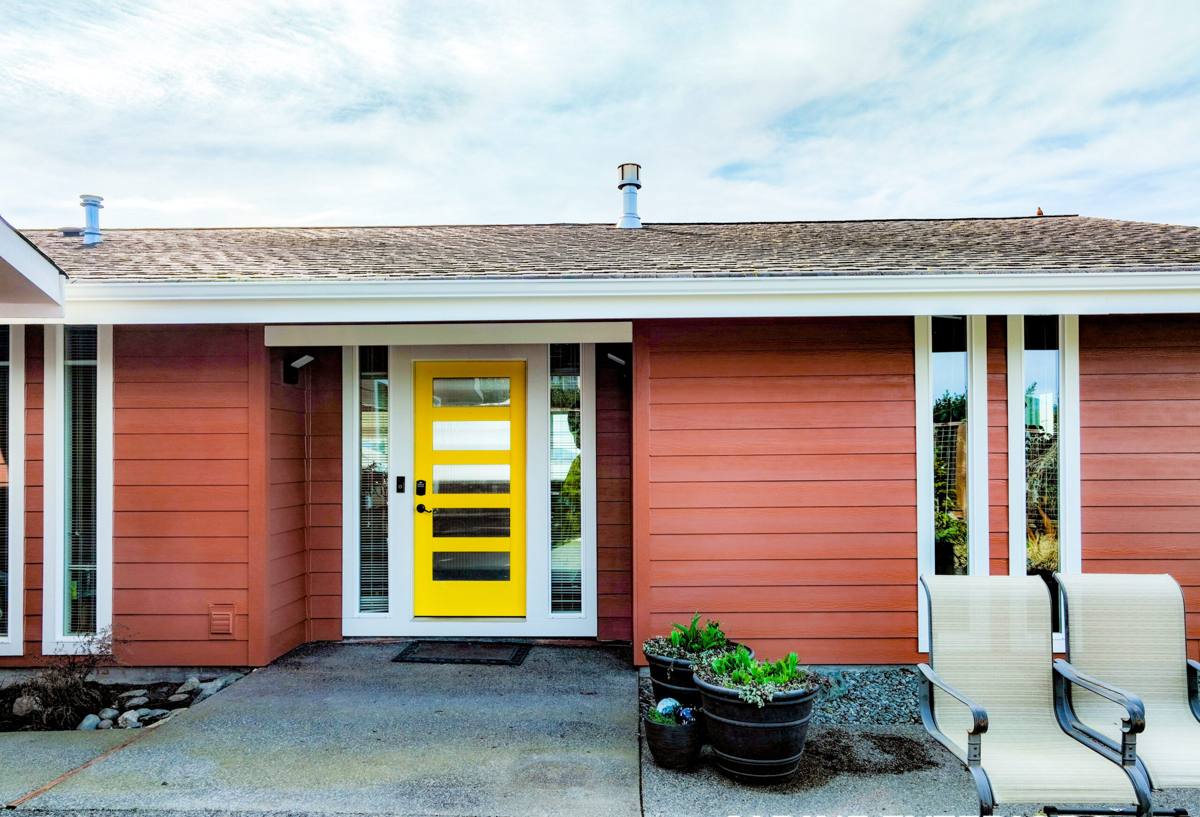
How to Tell East Lake Homes Are Due for Replacement, Not Just Repair
Not every siding problem calls for a full tear-off. But there's a point where patching becomes a losing game — you're spending money to delay the inevitable while moisture keeps working on the sheathing underneath. Signs that point toward replacement rather than repair:
- Soft or spongy spots when you press on siding or the trim around windows and doors
- Paint that keeps failing within a year or two of repainting, even on surfaces prepped correctly
- Visible warping, buckling, or gaps that have opened up between boards or panels
- Cracked or missing caulk at seams that reopens shortly after being resealed
- Siding that's original to a home built more than 20-25 years ago, especially older wood or first-generation composite products
- Any sign of moisture staining or discoloration on interior walls near exterior corners
If you're seeing two or more of these at once, it's usually a sign the whole system — not just a board here and there — has reached the end of its useful life.
What a Correct Siding Replacement Job Actually Involves
A siding replacement is only as good as what's underneath it. Rushed jobs — or jobs done by crews unfamiliar with how fiber cement behaves in this climate — tend to skip the steps that don't show up on the surface but matter most over the next 20-30 years.
Tear-off and substrate inspection
Old siding comes off down to the sheathing, and that sheathing gets inspected for rot, delamination, or hidden moisture damage before anything new goes up. Skipping this step is how homeowners end up with brand-new siding over a rotting wall a few years later.
Weather-resistive barrier
A correctly lapped and sealed weather barrier goes on before any siding, giving the wall a second line of defense against wind-driven rain that gets past the cladding itself. In a climate where storms come in sideways, this layer isn't optional.
Flashing at every penetration
Windows, doors, hose bibs, light fixtures, and any other wall penetration need proper flashing detail so water is directed out and away from the wall assembly, not funneled behind the siding.
Fastening to spec
Fiber cement siding has manufacturer-specified fastener patterns and clearances for a reason — get them wrong and you compromise both wind performance and the manufacturer's warranty. This is one of the most common places corners get cut on rushed jobs.
Clearances and caulking
Proper gaps at trim, corners, and grade level keep water from wicking into the bottom edge of boards, and factory-recommended sealants get used at every joint that calls for one.
Why We Install Only James Hardie Fiber Cement
We made a deliberate call to standardize on James Hardie siding and not offer vinyl, LP SmartSide, or other fiber cement brands. It comes down to how these products actually perform over decades in a Florida climate, not marketing.
Vinyl siding can warp and distort in sustained heat and doesn't hold up well against wind-driven debris in storm events — it's also a limited fire barrier compared to fiber cement. Engineered wood products like LP SmartSide use wood strand cores that, however well-treated, remain more moisture-sensitive at cut edges and fastener penetrations than a cement-based product, which matters in a climate where humidity and wind-driven rain are constants rather than occasional events. James Hardie's fiber cement is non-combustible, dimensionally stable in heat and humidity, and holds its factory-applied ColorPlus finish far longer than field-applied paint holds up on other substrates under intense UV exposure.
Hardie's HZ5 product line is specifically engineered for climates like ours — hot, humid, and storm-prone — with moisture and impact performance built for exactly the conditions East Lake sees. That's the version we install here.
What Homes Get With Hardie
| Feature | Why It Matters in East Lake |
|---|---|
| Non-combustible core | Fire resistance that vinyl and wood-based products can't match |
| ColorPlus factory finish | Holds color under intense, near-constant Florida UV far longer than field paint |
| HZ5 climate engineering | Built for high-humidity, storm-prone regions like the Gulf Coast |
| Dimensional stability | Resists the swelling, warping, and buckling common in humid, temperature-swinging climates |
| Transferable warranty | Backed by a manufacturer warranty that carries value if the home sells |
Cost Factors for an East Lake Siding Replacement
Every home is different, and we won't quote a number without seeing the house, but the variables that actually move the price are consistent from job to job.
| Factor | How It Affects the Job |
|---|---|
| Home size and wall complexity | More square footage, corners, and roof lines mean more material and labor |
| Substrate condition | Rotted sheathing found during tear-off adds repair work before new siding goes on |
| Siding profile and trim detail | Board-and-batten, varied reveal widths, and custom trim take more time than a single flat profile |
| Number of stories | Two-story sections require more scaffolding, staging, and safety setup |
| Existing siding removal | Multiple layers or difficult-to-remove old material adds tear-off time |
| Color and finish selection | Standard ColorPlus colors vs. premium or custom options can shift material cost |
Our Process for East Lake Homeowners
We keep the process straightforward and communicate clearly at each stage:
- On-site assessment — we walk the exterior, check current siding condition, and look for any signs of moisture or substrate damage
- Written estimate — a clear scope and price based on what we actually find, not a generic per-square-foot guess
- Tear-off and inspection — old siding comes off and the sheathing gets checked before anything new is installed
- Weather barrier and flashing — the moisture-management layer goes in correctly before siding starts
- Hardie installation to spec — fastening, clearances, and caulking done to manufacturer requirements, not shortcuts
- Final walkthrough — we go over the finished job with you before calling it done
Choosing a Contractor for East Lake — What Actually Matters
A siding replacement is a long-term investment in the home, and the installer matters as much as the product. Before hiring anyone for a job in East Lake or elsewhere in Oldsmar, it's worth checking:
- Proper Florida contractor licensing and active insurance, verifiable through the state license lookup
- Manufacturer training or certification specific to the siding product being installed
- A written scope that specifies weather barrier, flashing, and fastening details — not just "install siding"
- Familiarity with local permitting requirements for exterior work in Pinellas County
- Willingness to explain why they use the products they use, not just push whatever's cheapest
- References or a track record of work in the surrounding area, not just distant job photos
A crew that already works this area understands the practical realities — permitting timelines, common substrate conditions in homes of a certain age, and how local storms actually behave — rather than treating every job as a first encounter with Florida's climate.
Living With New Siding in East Lake
One advantage of fiber cement over other materials is how little upkeep it demands once it's installed correctly. There's no need for periodic repainting the way older wood siding requires, and the factory finish is designed to resist the fading that Florida sun causes on field-painted surfaces. A rinse with a garden hose a couple of times a year to clear pollen, dust, and salt residue is generally enough. Keeping gutters clear and grading away from the foundation also helps protect the bottom edge of the siding, which is the area most exposed to standing water and splashback during heavy rain.
If your East Lake home's siding is showing its age or you're planning ahead of the next storm season, we're happy to take a look and walk you through what we find — no pressure, no obligation. Reach out using the form below for a free estimate.