 Oldsmar Siding
 Siding Installation for Carrollwood-Area Homes
Homes in and around Carrollwood carry a mix of ages and construction styles, but they all face the same enemy: Tampa Bay weather. Whatever siding is on a house here eventually has to survive hurricane-force winds, punishing year-round UV exposure, wind-driven rain that gets forced sideways into wall assemblies, and salt-laden air that drifts in off the Gulf. Siding installation in this area isn't a cosmetic upgrade — it's a structural decision that determines how well a home holds up over the next 20 to 30 years.
We install siding in the Oldsmar and greater Pinellas County area regularly, which means we've seen what holds up under these conditions and what fails early. This page covers what a correct siding installation looks like for a Carrollwood-area home, what we install and why, and how our process works from first visit to final walkthrough.
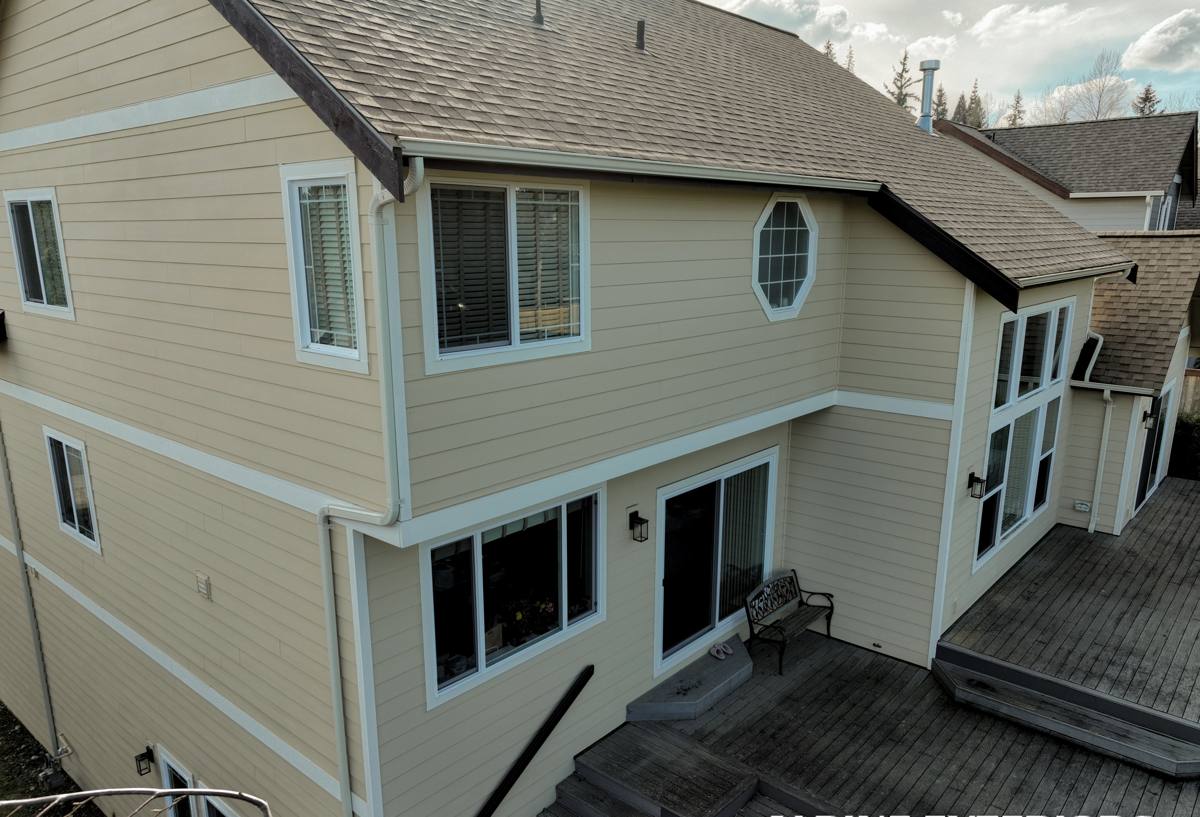
Why Local Climate Drives Every Decision on the Job
It's tempting to think of siding as a one-time purchase that just needs to "look good." In this climate, that mindset costs homeowners money down the road. A handful of specific stressors shape how we spec and install every job:
Hurricane-Force Wind Loads
Wind doesn't just push on siding — it gets underneath it. Uplift at panel edges and corners is where poorly installed siding fails first, usually at fastener lines that weren't spaced or embedded to spec. Products and installation methods that aren't rated for regional wind exposure are a liability during storm season, not just an inconvenience.
Intense, Year-Round UV
Florida sun is harder on exterior materials than most other parts of the country because it's strong for so much of the year. UV breaks down pigments, softens some plastics, and dries out organic materials, leading to fading, chalking, and surface degradation well before a siding product's expected service life is up.
Wind-Driven Rain
Rain that falls straight down is manageable. Rain that gets driven sideways by wind finds every gap, seam, and improperly lapped joint in a siding system. This is why flashing details and water-resistive barriers matter as much as the siding material itself — a great product installed with sloppy moisture management will still let water in.
Salt Air
Homes anywhere in the Tampa Bay corridor, even several miles inland, are exposed to salt-laden air carried in from the Gulf. Salt accelerates corrosion of fasteners and trim metal and can degrade certain coatings faster than manufacturers' general climate ratings assume.
What a Correct Siding Installation Actually Involves
Siding installation is often sold as a simple swap: old siding off, new siding on. Done correctly, it's a layered system, and skipping any layer is where most premature failures start.
Substrate Inspection and Repair
Before any new siding goes up, we inspect the sheathing and framing underneath the old material. Water intrusion from years of a failing siding system often causes rot or damage that isn't visible until the old panels come off. Installing new siding over compromised substrate just hides a problem that will resurface.
Water-Resistive Barrier and Flashing
A weather-resistive barrier goes over the sheathing, and flashing gets installed at every penetration point — windows, doors, hose bibs, light fixtures, and any place two different materials meet. This layer is what actually stops wind-driven rain from reaching the framing, regardless of how good the siding itself is.
Manufacturer-Spec Fastening
Fastener type, spacing, and placement are engineered by the manufacturer for specific wind zones. Nailing patterns that "look close enough" are a common shortcut that shows up later as loose panels, cracked caulk lines, or wind damage during the next storm. We follow published installation guidelines, not shortcuts.
Proper Clearances and Joints
Siding needs clearance from the ground, roofline, and other transitions to avoid trapping moisture. Butt joints and corners need to be treated correctly so they don't become the first failure point when the material expands and contracts with heat.
Why We Install Only James Hardie Fiber Cement
We made a decision as a company to install James Hardie fiber cement siding exclusively. We don't install vinyl, LP SmartSide, Cemplank, Allura, or unprimed wood siding like cedar or spruce. That's not a marketing position — it's a reflection of what we've found actually performs, year after year, in this specific climate.
Fiber cement is non-combustible, which matters in a state where lightning strikes and wildfire exposure are real considerations. It doesn't soften or warp under sustained heat the way some engineered wood and polymer products can. James Hardie's ColorPlus factory finish is baked on under controlled conditions, which gives it more consistent UV resistance than field-applied paint, and it's backed by a substantial, transferable finish warranty — a real advantage for a homeowner who may sell within the product's service life.
James Hardie also engineers regional product lines specifically for high-humidity, hurricane-prone climates like ours, rather than shipping one generic formulation nationwide. That climate-specific engineering is a big part of why we standardized on this one manufacturer instead of carrying multiple product lines.
How Hardie Fiber Cement Compares to Other Common Siding Materials
| Factor | James Hardie Fiber Cement | Vinyl Siding | Engineered Wood (LP SmartSide) |
|---|---|---|---|
| Combustibility | Non-combustible | Combustible, can soften/melt in heat | Combustible |
| UV/fade resistance | Factory-baked ColorPlus finish | Can fade and chalk over time | Depends on field-applied coating |
| Moisture behavior | Engineered to resist moisture damage when installed to spec | Resists rot itself, but traps moisture behind it if installed poorly | Wood core is vulnerable if the coating is breached |
| Wind performance | Rated product lines for high-wind regions | Can crack or blow off in high wind if not rated/installed correctly | Panel performance varies by installation quality |
| Typical service life with correct install | Multiple decades | Shorter, especially in intense UV | Shorter if moisture reaches the wood core |
Every siding product on this table has legitimate uses somewhere. Our position is narrower and more specific: for what a Pinellas County exterior has to survive, fiber cement installed correctly is the option we're willing to put our name on.
Our Siding Installation Process
The process is the same discipline whether the home is a single-story ranch or a larger two-story build, though timelines and material quantities scale with the job.
- On-site assessment: We walk the exterior, check existing siding and trim condition, and look for signs of underlying moisture damage.
- Detailed estimate: We spec out the Hardie product line, color, and trim details, and provide a clear written estimate before any work starts.
- Tear-off and substrate check: Old siding comes off, and we inspect sheathing and framing before covering anything back up.
- Repairs as needed: Any rot or damaged substrate gets addressed before new material goes on — never covered over.
- Weather barrier and flashing installation: This layer goes in before a single piece of siding is hung.
- Hardie siding installation: Installed to manufacturer specification for fastening, clearance, and joint treatment.
- Trim, caulking, and final detailing: Every seam and penetration point gets sealed correctly.
- Final walkthrough: We review the finished work with the homeowner before calling the job complete.
Signs a Carrollwood-Area Home May Need New Siding
Siding failure is often gradual, and homeowners frequently don't notice until interior damage shows up. Watch for these warning signs:
- Visible warping, buckling, or bowing panels
- Cracking or splitting, especially after storm season
- Soft spots when pressing on the siding near the base of the wall
- Paint or finish that's chalking, peeling, or fading unevenly
- Rising energy bills that can't be explained by anything else
- Visible gaps at seams, corners, or trim joints
- Mold, mildew, or musty smells along interior walls that back up to exterior siding
- Increased pest activity around the base of exterior walls
Any one of these on its own isn't necessarily an emergency, but several together usually mean the siding system is no longer doing its job as a moisture and wind barrier.
What Drives the Cost of a Siding Installation
Every home is different, so we don't publish blanket pricing, but these are the main factors that affect the cost of a project in this area:
| Cost Factor | Why It Matters |
|---|---|
| Home size and wall complexity | More square footage and more corners, dormers, and trim details mean more labor and material |
| Substrate condition | Rot or water damage found during tear-off requires repair before new siding can go on |
| Hardie product line selected | Different HZ5 profiles and trim packages carry different material costs |
| Color and finish selection | ColorPlus factory finishes vs. site-applied paint affect both cost and long-term maintenance |
| Accessibility | Two-story sections, tight lot lines, and landscaping can affect labor time |
We walk through these factors in person during the estimate so there are no surprises once work begins.
Why Hiring a Crew That Already Works This Area Matters
Siding installation isn't just about the product — it's about whether the crew installing it understands the conditions the finished job has to survive. A crew that regularly works in Oldsmar and the surrounding Pinellas County communities already accounts for regional wind ratings, humidity-driven moisture management, and the fastening and flashing details that matter most near the coast. That local experience shows up in the details: how corners are treated, how flashing is layered, and how conservative the crew is about fastener spacing when hurricane season is a yearly reality, not a hypothetical.
It also matters for accountability. A contractor who plans to keep working in this area has every incentive to install the job correctly the first time, since callbacks and warranty issues are handled locally, not by someone who's moved on to another state.
Ready to Talk About Your Siding?
If your Carrollwood-area home has siding that's aging, damaged, or just wasn't built for what Florida throws at it, we're happy to take a look. We'll give you an honest assessment, a clear explanation of what we'd recommend and why, and a straightforward estimate — no pressure, no hard sell. Use the form below to request your free estimate.